

From Counter to Dashboard: How Smart POS Changes the Way Retailers Manage Sales
For many retailers, the point of sale is simply where a customer pays. But every transaction contains information about what is happening inside the business. When that information becomes visible beyond the counter, a retailer can move from simply accepting payments to understanding sales activity and making better decisions.
The Day Starts at the Counter
It is a normal morning at a neighbourhood retail store. The owner arrives, opens the shop and begins preparing for the day's customers. Products are arranged, the counter is ready and the POS is switched on.
Before long, customers begin coming in. One customer pays for groceries. Another purchases household items. Someone else comes in for a few products and pays before heading out. Transaction after transaction, the business is moving.
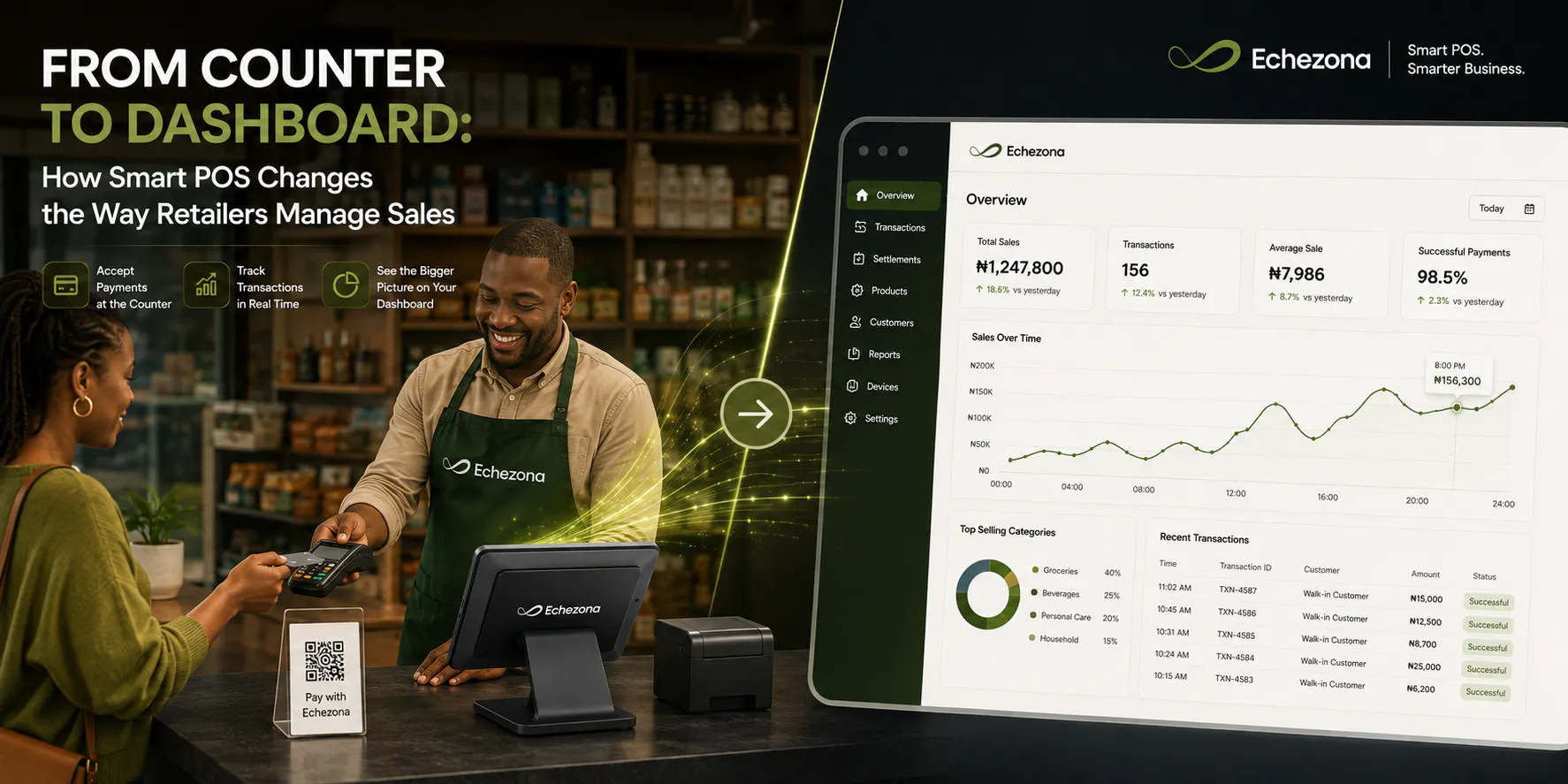
From the owner's perspective, the most immediate concern is simple: serve the customer, collect payment and keep the business moving. But while the day is happening at the counter, something else is happening in the background. Every completed transaction is creating a record of the business's activity.
The Problem With Only Looking at the Counter
The counter tells the retailer what is happening right now. A customer has just paid. An order has just been completed. Another transaction is waiting to be processed.
But running a business requires more than knowing what happened in the last few minutes.
The owner may want to understand how the day's sales are progressing, keep track of transaction activity or simply have a clearer picture of what is happening across the business. When payment activity and business visibility exist separately, getting that picture can become more difficult than it needs to be.
This is where the role of a POS begins to change.
A POS Can Be More Than a Payment Machine
A modern POS should not exist in isolation from the rest of the business.
It sits at one of the most important points in the customer journey: the moment when a sale becomes a transaction. That makes it a natural source of valuable business information.
Instead of treating the POS as nothing more than a device for collecting payments, retailers can think of it as part of a larger ecosystem. The payment happens at the counter, but the information created by that payment can become part of the retailer's wider view of the business.
That shift is important because visibility changes how a business operates.
From Processing Transactions to Seeing Activity
With Echezona, the POS sits within a broader payment ecosystem rather than functioning as a standalone point of interaction.
A retailer can accept payments through the POS while transaction activity becomes part of the same ecosystem that supports the business's other payment needs. The result is a more connected experience between what happens physically at the counter and what the business can see digitally.
The owner is no longer limited to the physical transaction taking place in front of them. The activity has a digital footprint that can contribute to a clearer view of the business.
The Dashboard Changes the Question
Imagine the same retailer checking the business later in the day.
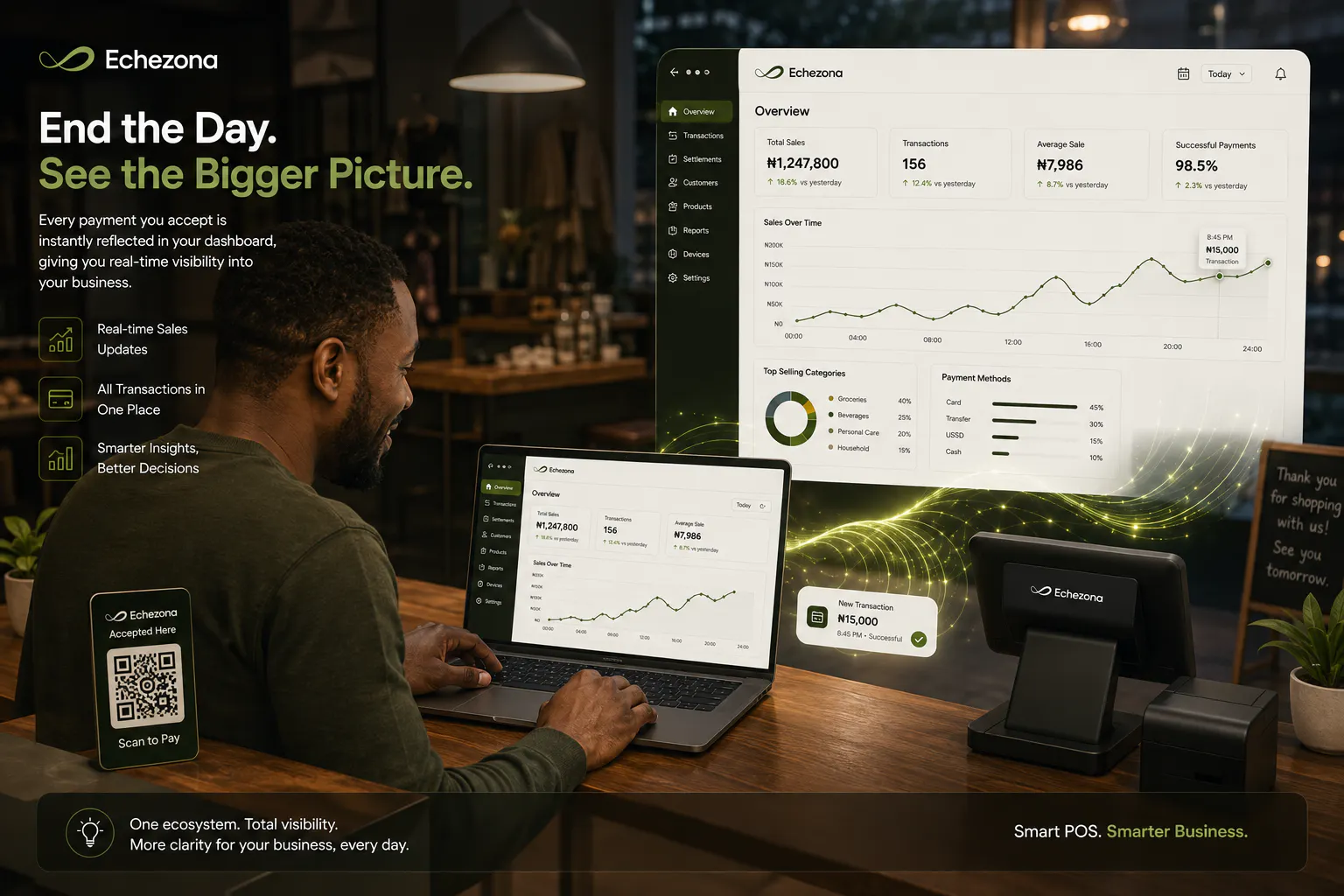
Instead of asking, "How many customers have paid me today?" and trying to reconstruct the answer from receipts, memory or different records, the retailer can look at the transaction activity available within the ecosystem.
The question changes from "What just happened?" to "What is happening across my business?"
That difference may seem small, but it represents an important change in how retailers interact with their sales information.
The counter is where the transaction happens. The dashboard is where the business can begin to understand the activity behind those transactions.
One Ecosystem, Fewer Gaps
Retail businesses rarely operate through one activity alone. A customer may discover a business online, interact with its products, make a payment at the counter and later return through another channel.
When these activities exist within disconnected systems, the retailer can end up managing different pieces of the customer and payment journey separately.
An ecosystem approach creates a different possibility. Instead of treating each payment channel as a separate destination, the retailer can have different payment experiences working as parts of a larger system.
The POS becomes one part of that system, rather than the entire system itself.
The POS is where the sale happens. The dashboard helps you see what the sale means for the business.
What This Means for the Retailer
For the shop owner, the biggest advantage is not simply having another piece of technology at the counter. It is having a more connected way of working.
The retailer can focus on serving customers while payments are being processed, knowing that transaction activity is also contributing to the digital side of the business.
As the business grows, that connection becomes increasingly valuable. More customers mean more transactions, more activity and more information. A system that can bring that activity into one ecosystem becomes more useful as the business becomes more complex.
The technology therefore grows in value alongside the business.
From Today's Sales to Tomorrow's Decisions
A retailer does not need a complicated strategy to benefit from better visibility. Sometimes the first step is simply knowing what is happening.
When transaction activity is easier to access and understand, the business owner has a stronger foundation for reviewing performance, spotting patterns and thinking about what comes next.
The POS is therefore not just about completing today's sale. It can become part of the infrastructure that helps the retailer understand the business they are building.
That is the difference between simply processing payments and building a connected payment operation.
Built Around How Your Business Works
Echezona is designed around the idea that businesses should not have to reshape their operations around disconnected payment tools.
The POS is one part of a broader ecosystem that can support the way businesses accept and manage payments. Whether the transaction begins at a physical counter or through another payment channel, the objective is to create a more connected experience around the business.
Because the best payment infrastructure is not simply the one that processes a transaction. It is the one that fits into the way the business actually operates.
The Counter Is Only the Beginning
The retail counter will always be important. It is where customers meet the business, products change hands and payments are completed.
But the value of a modern POS does not have to stop there.
When payment activity becomes connected to a wider digital ecosystem, retailers can move from simply processing sales to gaining greater visibility into their business activity. The counter remains the point of transaction, but the dashboard becomes another window into the business.
That is the shift from counter to dashboard.
And for a growing retailer, seeing more clearly can be just as valuable as selling more.

