

The customer had already done the hard part.
They found the product. They liked it. They added it to their cart. They were ready to pay.
Then they reached checkout.
What should have been the final step became a series of unnecessary decisions, confusing fields, payment issues and delays.
And eventually, the customer left.
The Customer Had Already Decided to Buy
Imagine an online customer browsing a fashion store late in the evening.
She finds a dress she likes, checks the size, looks through the available colours and adds it to her cart.
She has already made the decision.
She clicks Checkout.
From the business's perspective, this should be the easiest part of the journey. The customer has shown clear purchase intent. The product has already done its job.
All the business needs to do now is help the customer complete the transaction.
But this is where the experience can change.
Then Checkout Became a Chore
Instead of moving smoothly toward payment, the customer is presented with a long form.
Name. Email. Phone number. Address.
Delivery information. Payment details. More fields. More clicks.
More opportunities to stop.
She fills in some of the information, gets distracted by an unclear instruction and has to go back.
The payment option she wants isn't immediately obvious.
She tries again. The page takes too long to respond.
At this point, the customer's initial excitement has started to disappear.
She wanted the product. She didn't want the process.
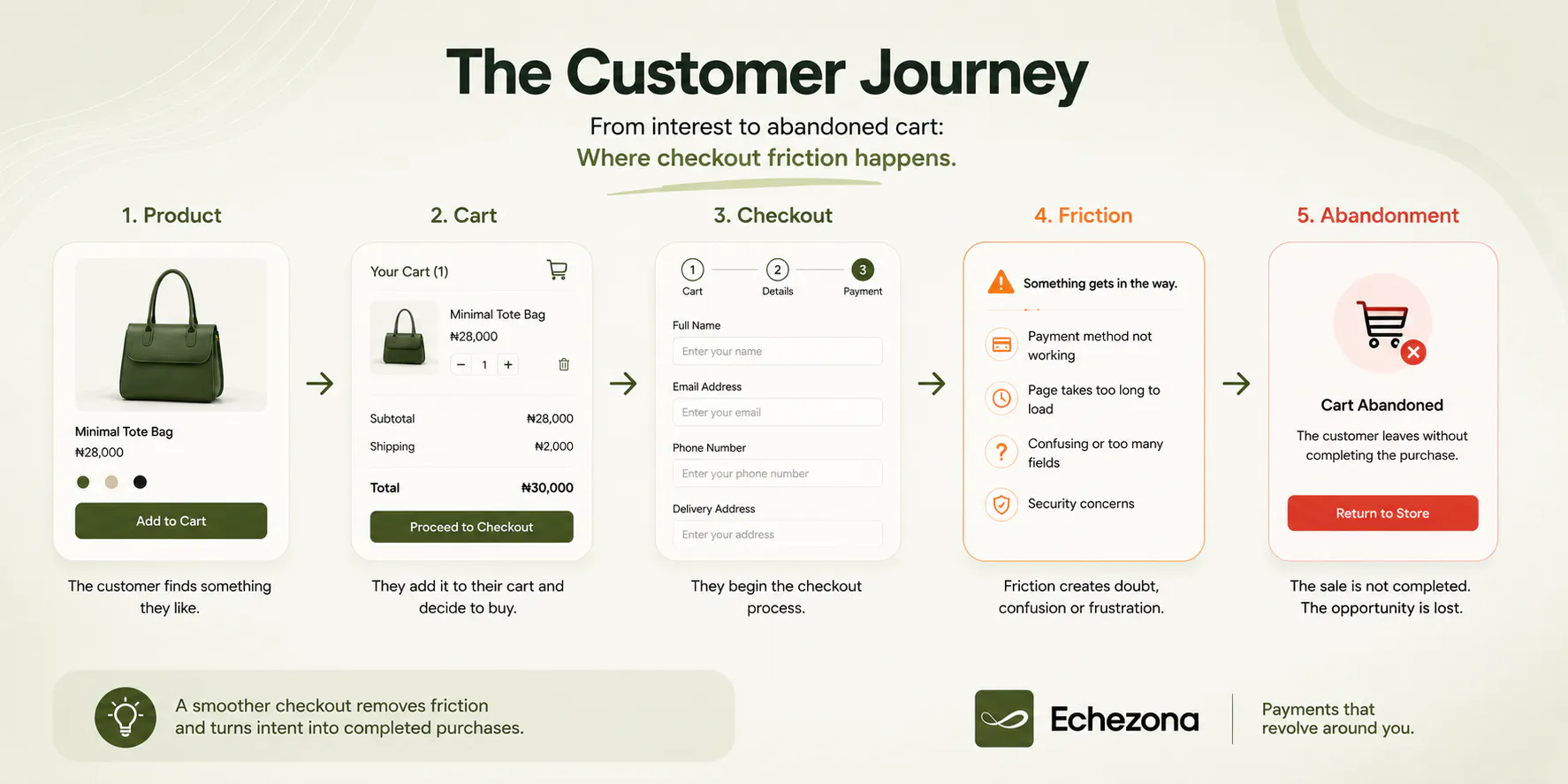
Checkout Is Part of the Customer Experience
Businesses often think about checkout as a technical requirement.
The customer selects a product. The system calculates the total. The payment gateway processes the transaction.
Done.
But customers don't experience checkout as a technical system. They experience it as part of the buying journey.
If the checkout is confusing, slow or unnecessarily complicated, the customer doesn't separate that experience from the business. The checkout becomes part of how they perceive the brand.
A great product experience can be weakened by a poor payment experience.
Every Extra Step Creates Another Opportunity to Leave
Online customers have options.
If completing a purchase becomes unnecessarily difficult, they can close the page, return later or find another seller.
This doesn't mean every abandoned checkout is caused by the payment process.
Customers change their minds. Prices can affect decisions. Delivery costs can influence purchases.
But businesses should not introduce additional friction where it can be avoided.
The goal is simple: once a customer has decided to buy, the path to payment should help them complete that decision rather than interrupt it.
A Checkout Built Around the Customer
A better checkout experience starts by asking a simple question:
What does the customer actually need to complete this purchase?
The answer isn't more complexity.
It is a clear path from purchase intent to successful payment.
Echezona Checkout is designed to help businesses create a payment experience that fits naturally into the way their customers buy.
Instead of forcing customers through unnecessary friction, businesses can create a more direct route from Buy Now to Payment Successful.
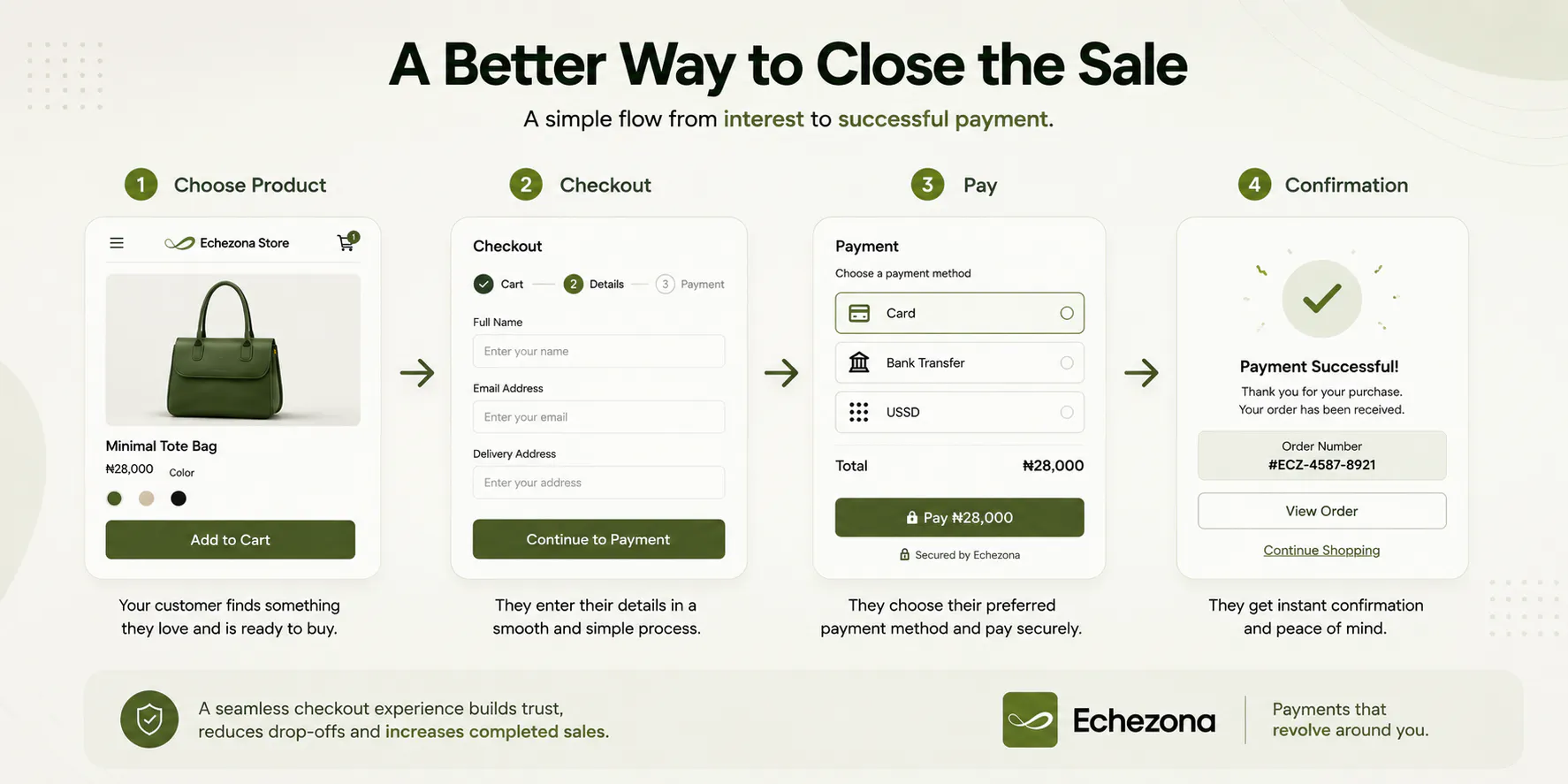
What a Better Checkout Should Feel Like
A good checkout should feel almost invisible.
The customer knows what they are buying, they know how much they are paying, they understand what they need to do next.
They can select their preferred payment method without unnecessary confusion. And when the payment is complete, they receive clear confirmation.
There is no mystery; No unnecessary back-and-forth; No wondering whether the transaction worked.
Just a clear path from intention to completion.
Why Checkout Matters More as You Grow
For a business processing a small number of online orders, a few abandoned checkouts may not immediately stand out.
But as traffic and transaction volume increase, the impact becomes much more significant.
Imagine bringing hundreds or thousands of potential customers to your website every month.
Your marketing gets them there.
Your products capture their attention.
Your website builds their interest.
They add products to their cart.
Then some of them leave at the final stage because completing the purchase is harder than it should be.
That means the business has already paid the cost of attracting the customer without receiving the value of the completed transaction.
A better checkout helps protect the work that happens before payment.
Your marketing gets customers to the checkout. Your checkout helps turn them into customers.
The Bigger Lesson for Online Businesses
The checkout isn't just where customers pay.
It is where interest becomes revenue.
Businesses spend time improving their products, advertising, websites and customer experience. The payment stage deserves the same attention.
Because a customer who reaches checkout has already moved much further down the buying journey than someone simply viewing a product.
They are telling you they are ready.
The job of the checkout is to make it easy for them to follow through.
Don't Let Payment Be the Reason the Sale Stops
The customer in our story didn't necessarily reject the product.
She didn't necessarily reject the price.
She simply encountered too much friction at the point where she expected things to become easier.
That distinction matters.
When a business improves its checkout experience, it isn't simply making payments more convenient.
It is protecting the journey that brought the customer there in the first place.

